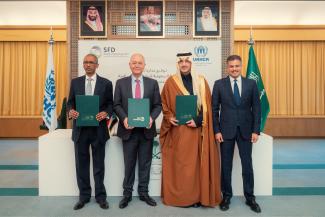
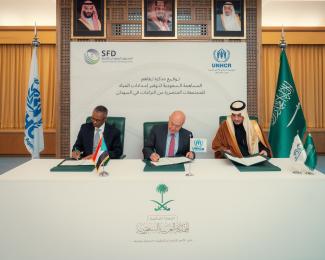
Geneva, 28 January 2026 – The Kingdom of Saudi Arabia, represented by H.E. Sultan Abdulrahman Al-Marshad, CEO of the Saudi Fund for Development (SFD) signed today a USD 10 million grant Memorandum of Understanding (MoU) with the Office of the United Nations High Commissioner for Refugees (UNHCR) and the Republic of Sudan, to strengthen water supply systems and support communities affected by conflict and water scarcity. This contribution reflects the Kingdom’s ongoing commitment to development support and improving essential services for vulnerable populations.
The MoU was signed by H.E. Sultan Abdulrahman Al-Marshad, CEO of SFD; H.E. Barham Salih, United Nations High Commissioner for Refugees; and Ambassador H.E. Hassan Hamid Hassan, Permanent Representative of the Republic of Sudan to the United Nations Office at Geneva. The signing took place at the Permanent Mission of the Kingdom of Saudi Arabia to the United Nations office and other International Organizations in Geneva.
The ceremony was attended by Ambassador H.E. Abdulmohsen Majed Bin Khothaila, Permanent Representative of Saudi Arabia to the United Nations Office at Geneva, along with representatives from SFD, UNHCR, and the Republic of Sudan, demonstrating the continued cooperation between all three parties in support of essential services for vulnerable communities.
Under the agreement, the Saudi-funded grant will support the rehabilitation and expansion of key water supply systems, including improvements to the Nile water system in Khartoum. The initiative incorporates solar-powered operations, technical capacity building, and community participation to ensure long-term sustainability, equitable access, and strengthened resilience to climate-related pressures.
‘’When people have access to essential services, they regain dignity, stability, and the ability to move forward. This generous financial support goes beyond meeting immediate water needs — it strengthens resilience and self-reliance among displaced people while reinforcing the critical systems host communities depend on,” said UN High Commissioner Salih, underscoring that lasting solutions require strong partnerships and sustained investment.
UNHCR’s partnership with development actors such as the Saudi Fund for Development supports a strong double‑nexus approach, providing urgent relief to vulnerable forcibly displaced people while also delivering longer-term infrastructure support that benefits both displaced communities and their hosts.
Across Sudan, conflict and instability have left many families without reliable access to clean water. This initiative forms part of Saudi Arabia’s wider humanitarian efforts, aiming to reduce daily hardship—particularly for women and children—while lowering the risk of waterborne diseases and supporting community health and stability. The project reflects the Kingdom’s continued commitment to helping vulnerable populations access essential services that restore dignity and improve everyday life.
The agreement builds on more than 10 years of cooperation between SFD and UNHCR, during which both institutions have worked together to support humanitarian programs, strengthen essential services, and improve the well-being of displaced and vulnerable communities. During this period, SFD has supported UNHCR through 18 projects valued at more than USD 85 million, spanning countries including Pakistan, Myanmar, Thailand, Jordan, Lebanon, Syria, Afghanistan, and now Sudan. This long-standing collaboration reflects shared goals in resilience, dignity, and sustainable development.
H.E. Sultan Abdulrahman Al-Marshad, CEO of SFD, said: “Access to safe and reliable water is fundamental to health, stability, and everyday life. Through this grant and our partnership with UNHCR, the Saudi Fund for Development is helping to strengthen essential water infrastructure in Sudan and provide sustainable solutions that meet both urgent needs and long-term development goals.”
Saudi Arabia, through SFD, continues to advance humanitarian assistance while reinforcing its commitment to sustainable development and the well-being of vulnerable communities worldwide.